Introduction
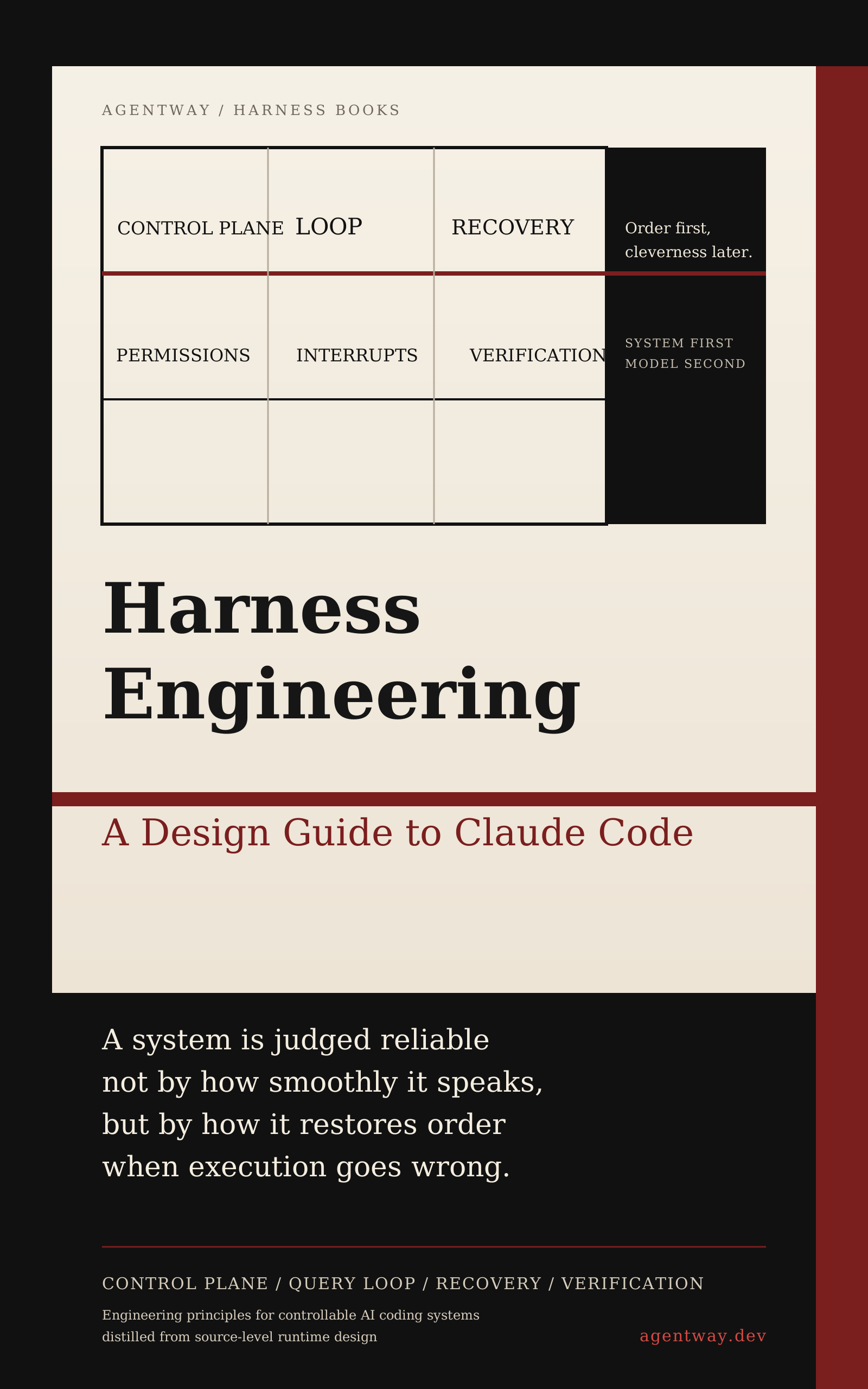
This book is not asking whether a model can write code. It asks how to keep a code-writing model from steering an engineering system off course once it is plugged into terminals, repositories, and team workflows.
This is not a stitched set of source comments, and not a feature tour. It focuses on how Claude Code constrains an unstable model into a sustainable engineering order, where control plane, main loop, tool permissions, context governance, recovery paths, multi-agent verification, and team practices form one coherent skeleton.
This book starts from three reading assumptions:
- The center of gravity is not model capability, but how the harness organizes constraints and execution
- The goal is not line-by-line function narration, but why the runtime had to grow this way
- The value is not personal trick collection, but turning structure into reusable team practice
Recommended reading order:
- Preface: Harness, Terminals, and Engineering Constraints
- Chapter 1 Why Harness Engineering Matters
- Chapter 2 Prompt Is Not Personality, Prompt Is the Control Plane
- Chapter 3 Query Loop: The Heartbeat of an Agent System
- Chapter 4 Tools, Permissions, and Interrupts: Why Agents Cannot Touch the World Directly
- Chapter 5 Context Governance: Memory, CLAUDE.md, and Compact as a Budgeting Regime
- Chapter 6 Errors and Recovery: An Agent System That Keeps Working After Failure
- Chapter 7 Multi-Agent Work and Verification: Managing Instability Through Division of Labor
- Chapter 8 Team Adoption: Turning a Smart Tool into a Reusable Institution
- Chapter 9 Ten Principles of Harness Engineering
- Appendix A Checklists: Turning Principles into Executable Constraints
- Appendix B Diagrams: Drawing the Runtime Skeleton
- Appendix C Source Map: Which Files Ground Each Chapter
If you only want the consolidated judgment first, jump to Chapter 9.