The Harness Design Philosophies of Claude Code and Codex
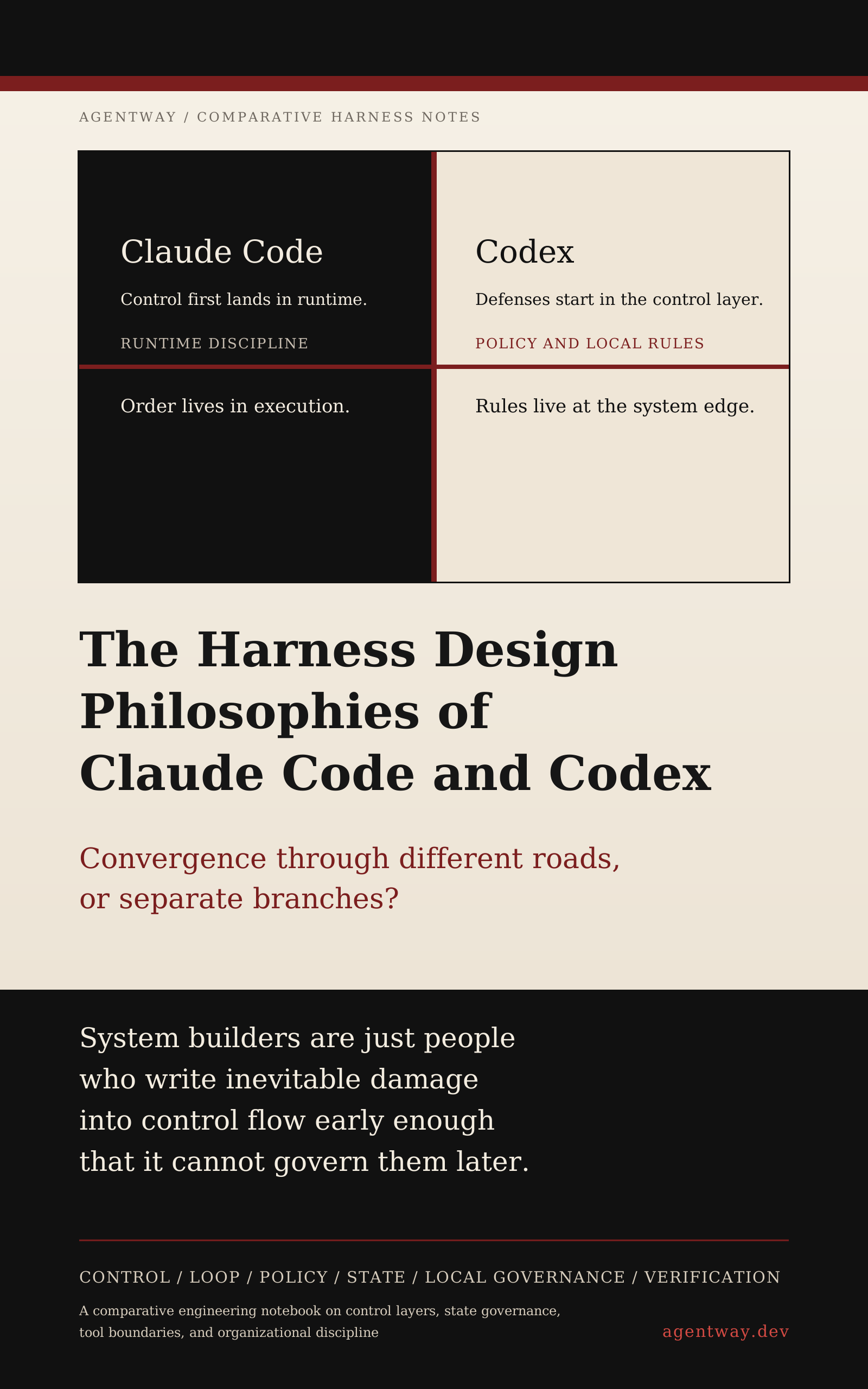
Subtitle: convergence, divergence, and the engineering choices behind two coding-agent systems.
“Life is suffering, and harness engineering is the art of making suffering deliberate.”
This book is a comparative anatomy of two harnesses: Claude Code, which grew out of operational experience, and Codex, which was born from a highly explicit policy and control layer. We are not tallying tools; we are examining where each system offloads trust, structures governance, and constrains a fundamentally unreliable model.
Three assumptions that guide this story:
- The comparison is centered on harness design, not model capabilities.
- A harness is a deliberate power-distribution system, not a feature checklist.
- Engineering differences usually emerge from where order is placed, not what it is called.
Recommended reading order:
- Reading Map: How to read this book alongside the first volume
- Preface: Two harnesses, not one accessory pack
- Chapter 1: Why we pair Claude Code and Codex
- Chapter 2: Two control planes—dynamic prompt assembly vs. structured instruction fragments
- Chapter 3: Heartbeat vs. threads, rollouts, and state bridges
- Chapter 4: Tools, sandboxes, and execution policy
- Chapter 5: Skills, hooks, and local governance
- Chapter 6: Delegation, verification, and persistent state
- Chapter 7: Convergence, divergence, and where the philosophies overlap
- Chapter 8: If you build your own harness, what to study first
- Appendix A: Source map for this comparison
- Appendix B: Checklists for spotting which harness you are closer to
For the short version of the thesis, jump to Chapter 7.